The United States offers extraordinary business opportunities, but not every location is suitable for every company. Real estate, labor, logistics, infrastructure, taxation, government policies, and established international business communities can all influence the success of your operation.
At American Gateway Partners, we help international companies identify locations that make practical and financial sense. Drawing on our business experience, local relationships, and knowledge of American operating conditions, we help you make informed decisions and avoid costly mistakes.
From manufacturing and distribution centers to international trade hubs and growing corporate destinations, each American market offers distinct opportunities and challenges.
Explore our featured locations and discover their industrial strengths, business environment, international communities, and potential advantages for your company.
Every business is different. We help you determine which location best supports your particular objectives, operating requirements, and budget.
Selecting a U.S. location is about more than finding available property. A successful decision must account for how the local economy, workforce, infrastructure, government requirements, business communities, and operating costs fit your company’s needs.

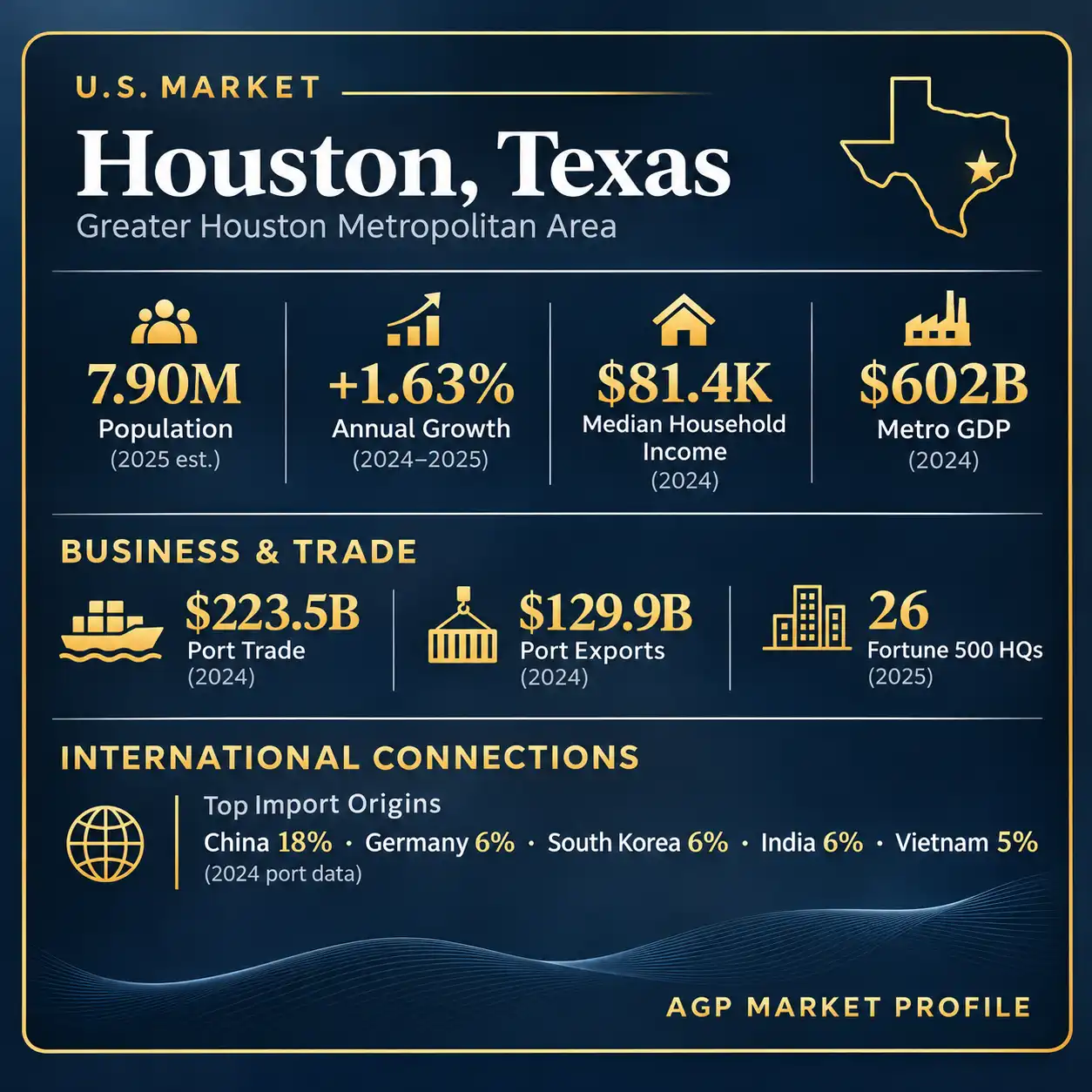
Houston offers a substantial industrial economy, extensive transportation infrastructure, and strong international business connections. Its combination of manufacturing capabilities, port access, and established Vietnamese, Chinese, and Latin American communities makes it particularly relevant to international companies seeking a U.S. operating base.
Texas offers a distinctive tax and regulatory environment, including no state individual income tax. However, companies must carefully assess local property taxes, business taxes, permitting, environmental requirements, insurance, and infrastructure obligations. Requirements can vary considerably by municipality and project.
Best Suited For: Manufacturing, import-export businesses, industrial operations, warehousing, and fulfillment.
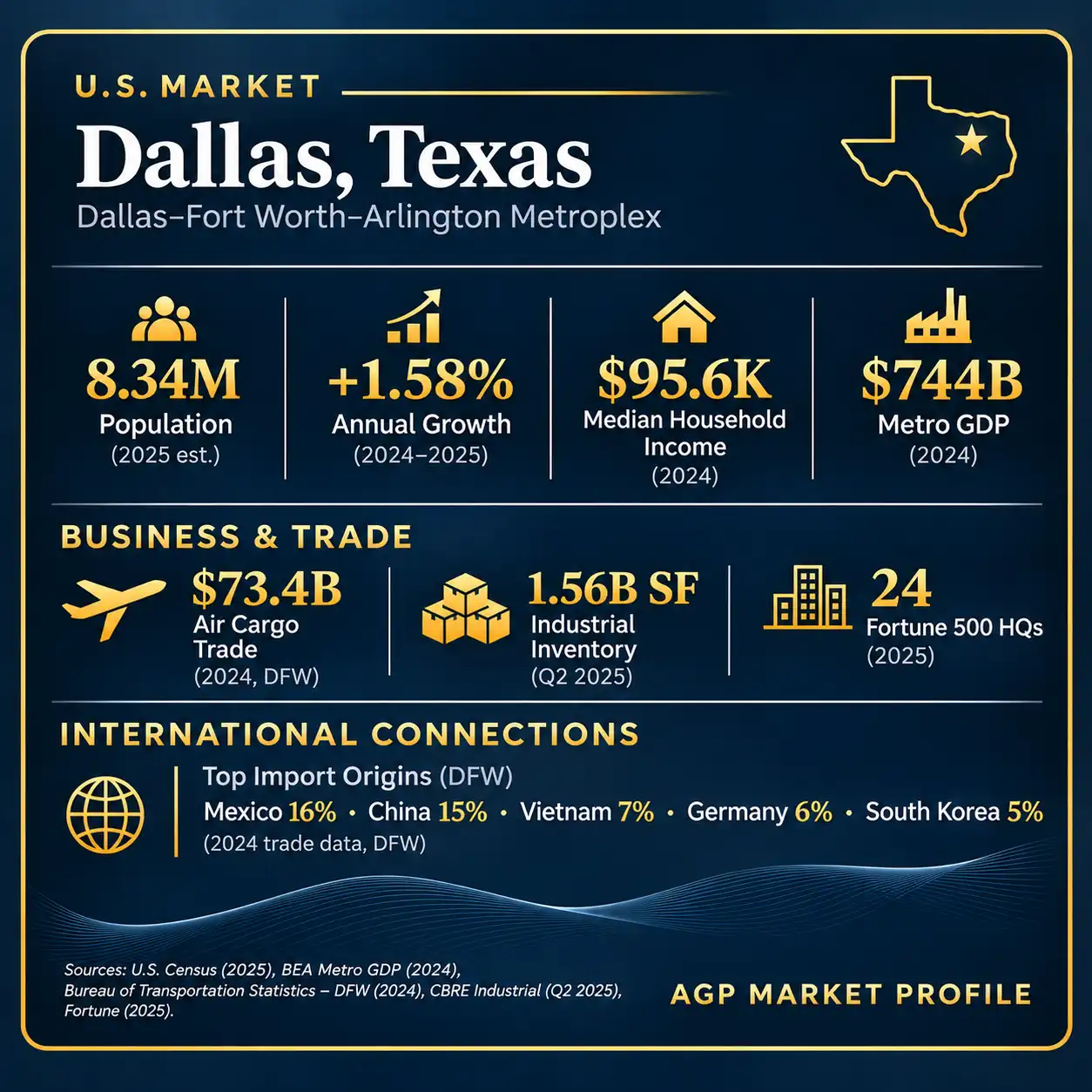
Dallas–Fort Worth is a major American commercial and distribution center. Its extensive highway, rail, airport, and industrial infrastructure provides international companies with access to customers and suppliers across the country.
Dallas–Fort Worth operates within Texas’s broader tax and business framework, but its many municipalities have different permitting procedures, property tax burdens, development requirements, and economic-development programs.
Best Suited For: Nationwide distribution, e-commerce, wholesale operations, and corporate offices.


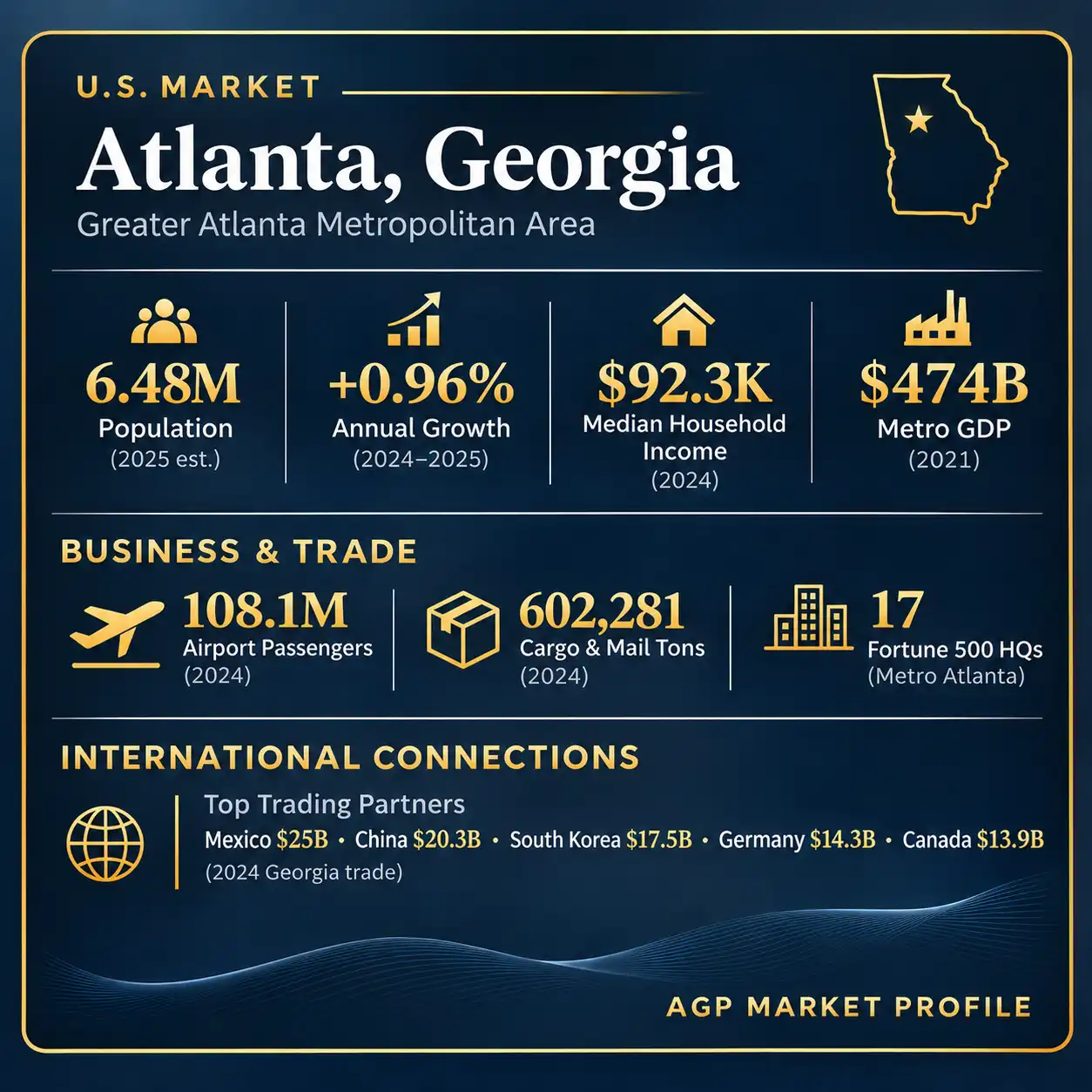
Atlanta is a major southeastern commercial center with extensive transportation networks and access to a large regional consumer market. Its growing international business community and established logistics infrastructure make it an attractive option for companies seeking to serve the eastern United States.
Georgia offers economic-development and workforce initiatives for qualifying businesses. Companies should evaluate state taxes, local permitting, labor requirements, development incentives, and regulations applicable to their industry.
Best Suited For: Consumer products, distribution, light manufacturing, and regional business operations.
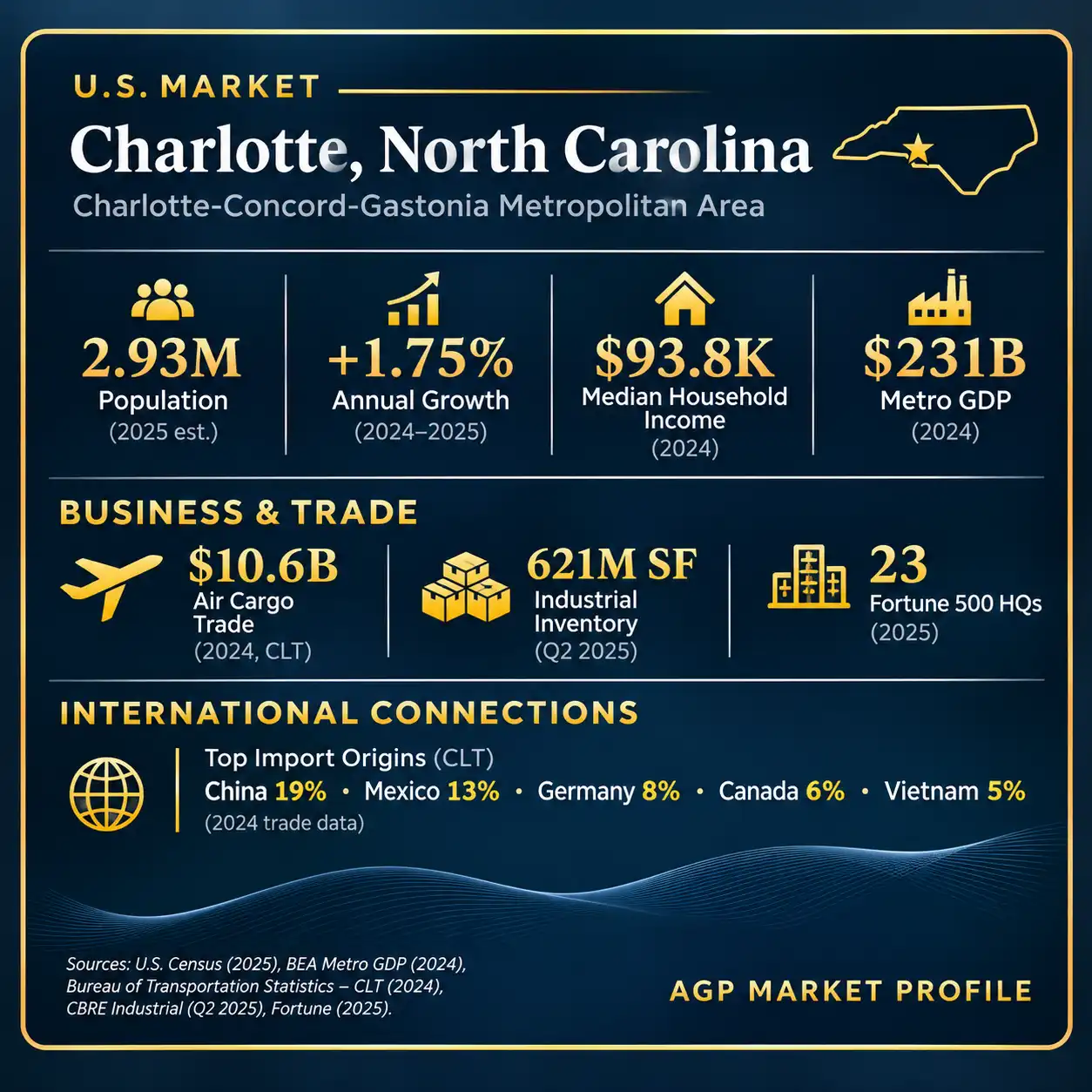
Charlotte combines a substantial financial-services industry with growing corporate operations and access to the manufacturing economies of North and South Carolina. It may offer an attractive environment for companies requiring professional talent and a southeastern presence.
North Carolina provides economic-development and workforce programs for eligible investments. Companies should consider state and local taxes, zoning, building approvals, labor requirements, and the availability of financial incentives.
Best Suited For: Corporate offices, business services, regional distribution, and selected manufacturing operations.


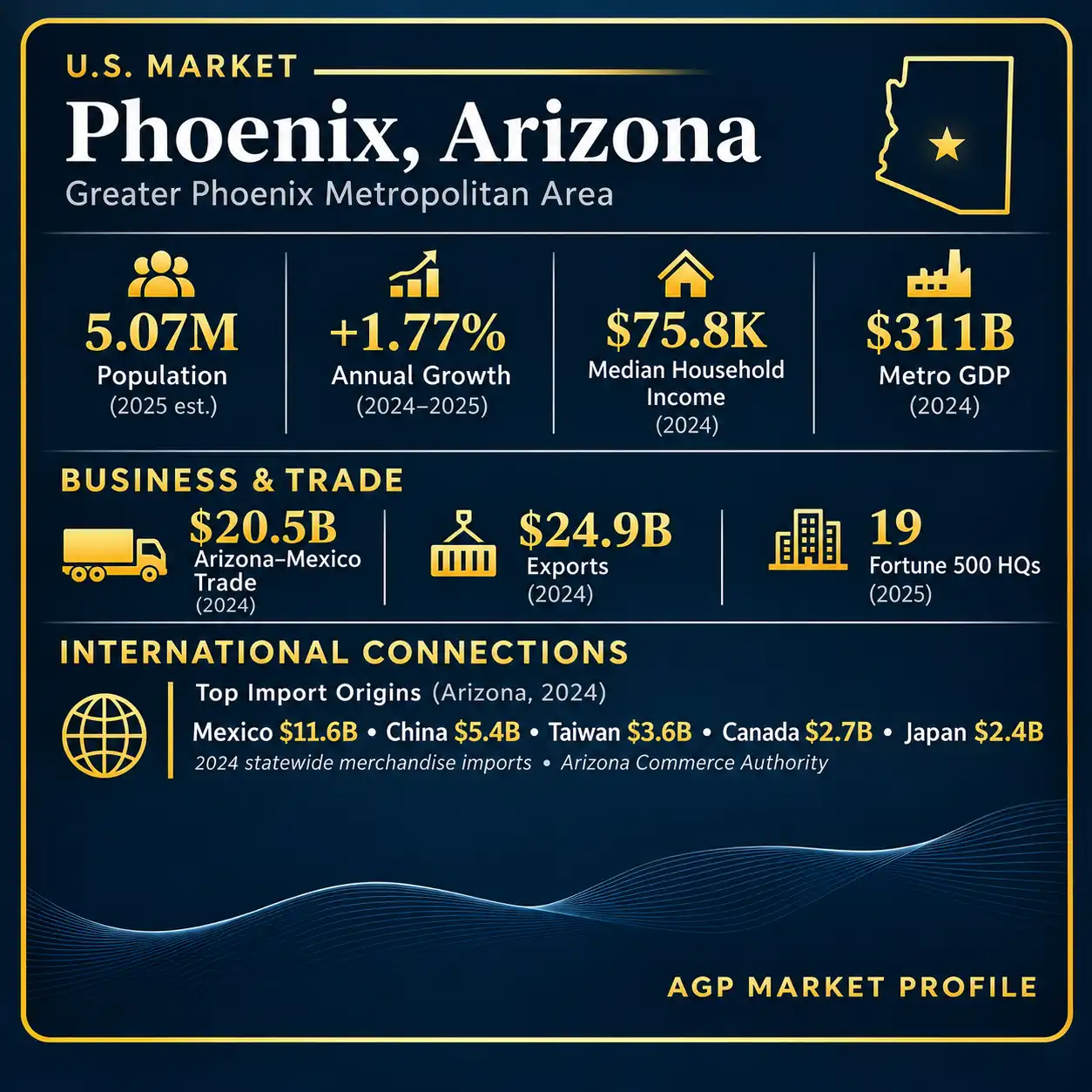
Phoenix has become an important location for advanced manufacturing, electronics, and industrial suppliers. Its proximity to California and Mexico offers opportunities for companies serving western U.S. markets and cross-border supply chains.
Arizona offers programs aimed at attracting investment and industry. Manufacturers must carefully consider local development approvals, environmental requirements, water availability, electrical infrastructure, and incentives tied to specific projects.
Best Suited For: Advanced manufacturing, electronics, industrial suppliers, and western distribution.
Depending on your industry, customers, supply chain, and international relationships, other markets may provide important strategic advantages.
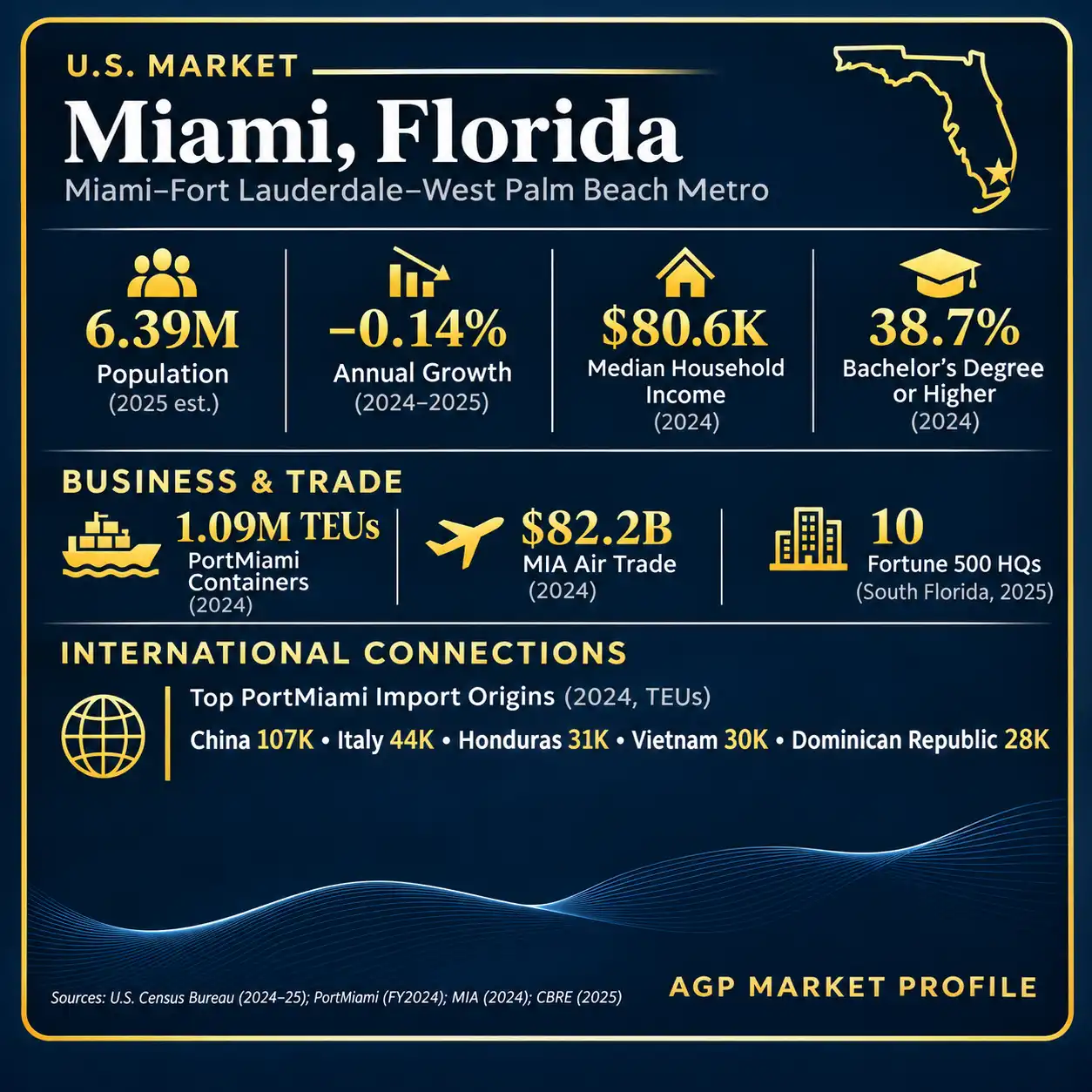
Miami is a natural commercial connection between the United States and Latin America, with well-established Colombian, Cuban, Venezuelan, and other Latin American communities and extensive international business relationships.
Latin American business networks, international banking, air cargo, and regional headquarters opportunities.
Florida’s tax framework and international business ecosystem can be attractive, but local permitting, insurance, hurricane exposure, and property costs require evaluation.
Expensive real estate, storm exposure, insurance costs, and limited industrial space in prime locations.
Best For: Colombian and Panamanian companies, Latin American headquarters, import-export businesses, and international services.


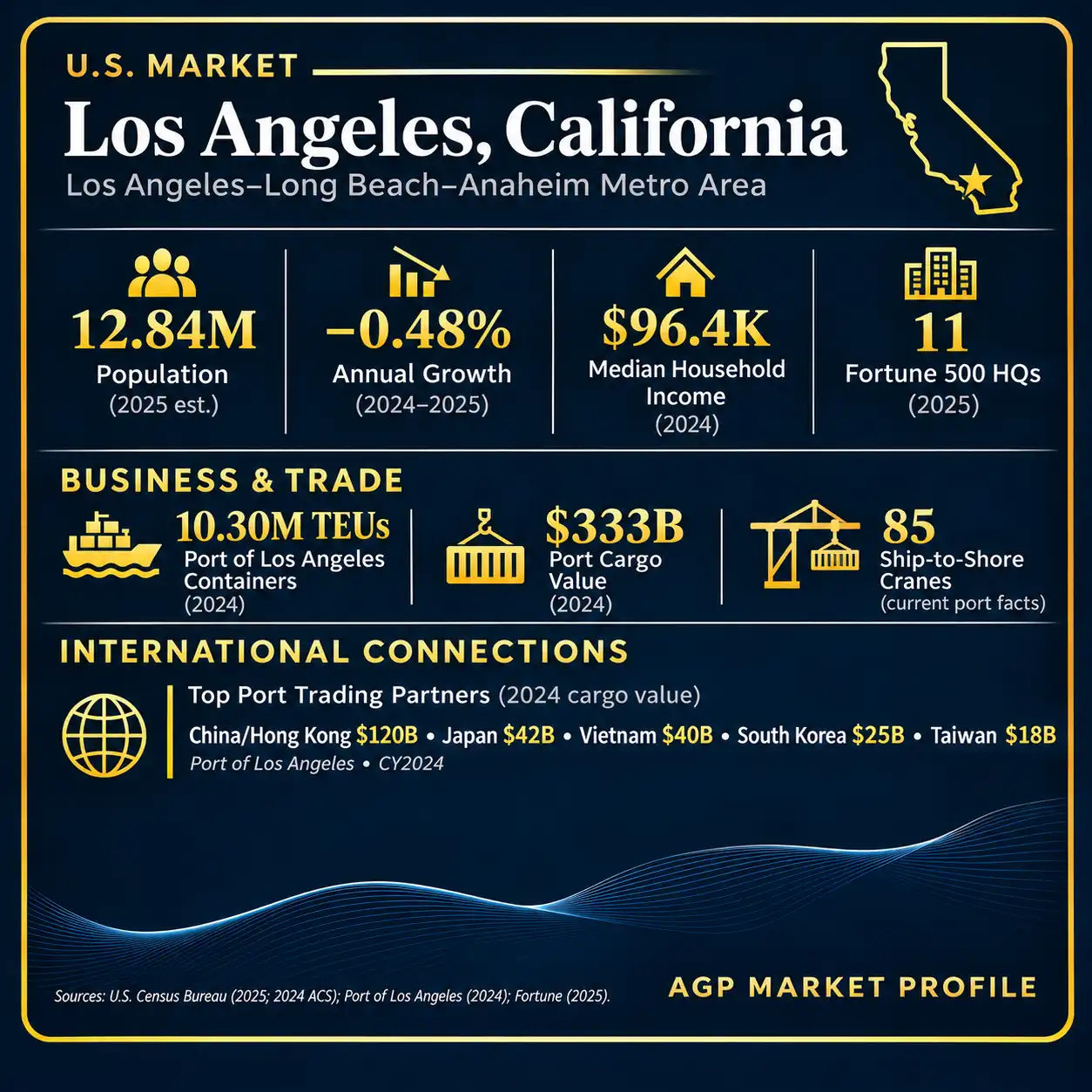
Southern California offers access to major Pacific ports, international commerce, and a large consumer market. The greater region includes extensive Chinese business communities and one of the country’s most established Vietnamese-American populations, particularly in Orange County.
Asian trade routes, established international communities, extensive logistics infrastructure, and consumer-market access.
California has extensive employment, environmental, and other regulatory requirements. Companies must evaluate taxes, compliance costs, permitting, and operating expenses against the commercial advantages.
High labor and occupancy costs, congestion, and regulatory complexity.
Best For: Chinese and Vietnamese importers, consumer goods, fashion, technology, and West Coast distribution.
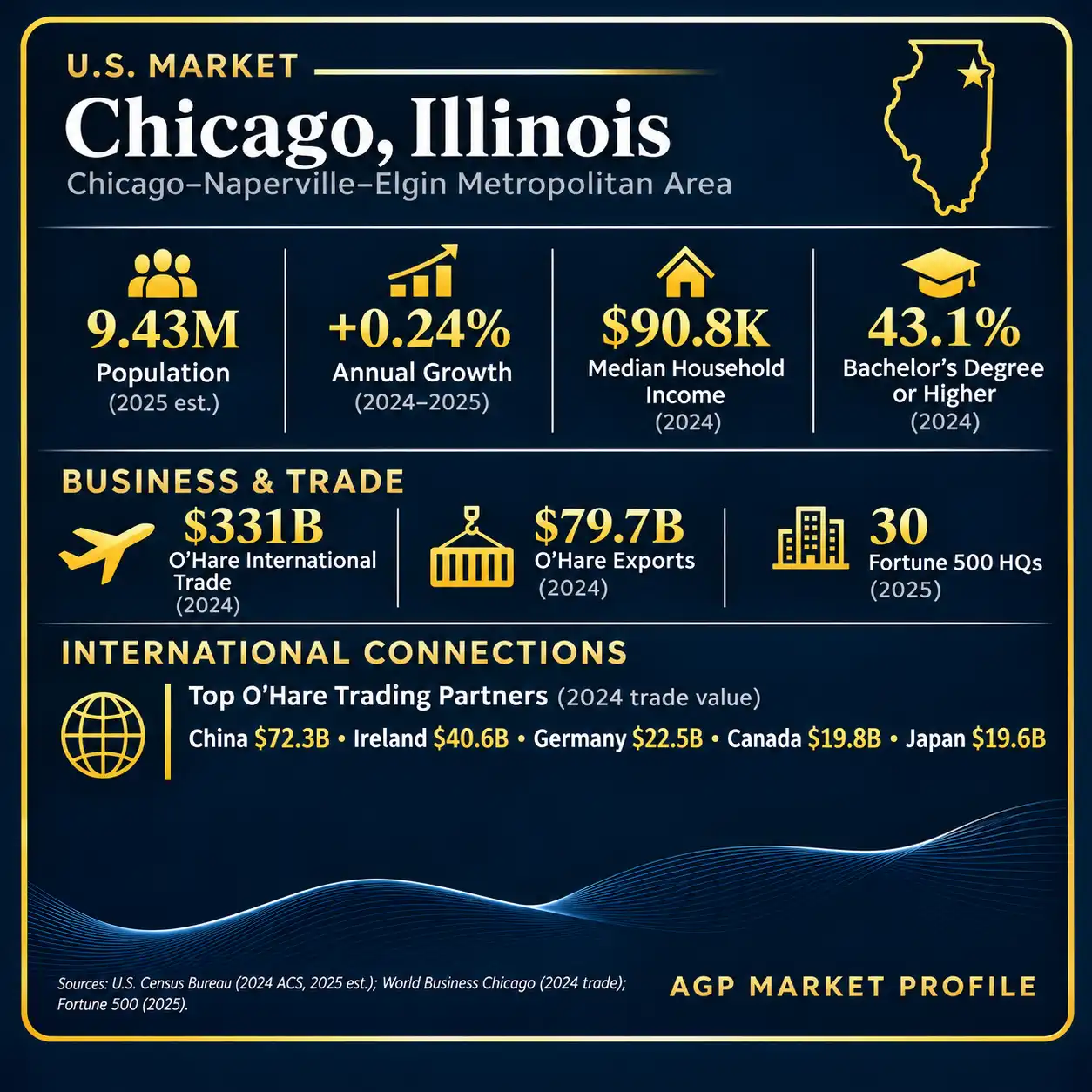
Chicago is a major manufacturing, transportation, and distribution center, supported by extensive highway, rail, and air-freight networks. Its diverse economy and established Chinese, Latino, and other international communities support a wide range of business activities.
Central distribution access, industrial suppliers, freight infrastructure, and skilled labor.
State and local taxes, labor rules, development approvals, and municipal regulations must be evaluated alongside Chicago’s substantial commercial infrastructure.
Winter weather, congestion, taxation, and infrastructure costs.
Best For: Manufacturing, machinery, wholesale distribution, and nationwide logistics.


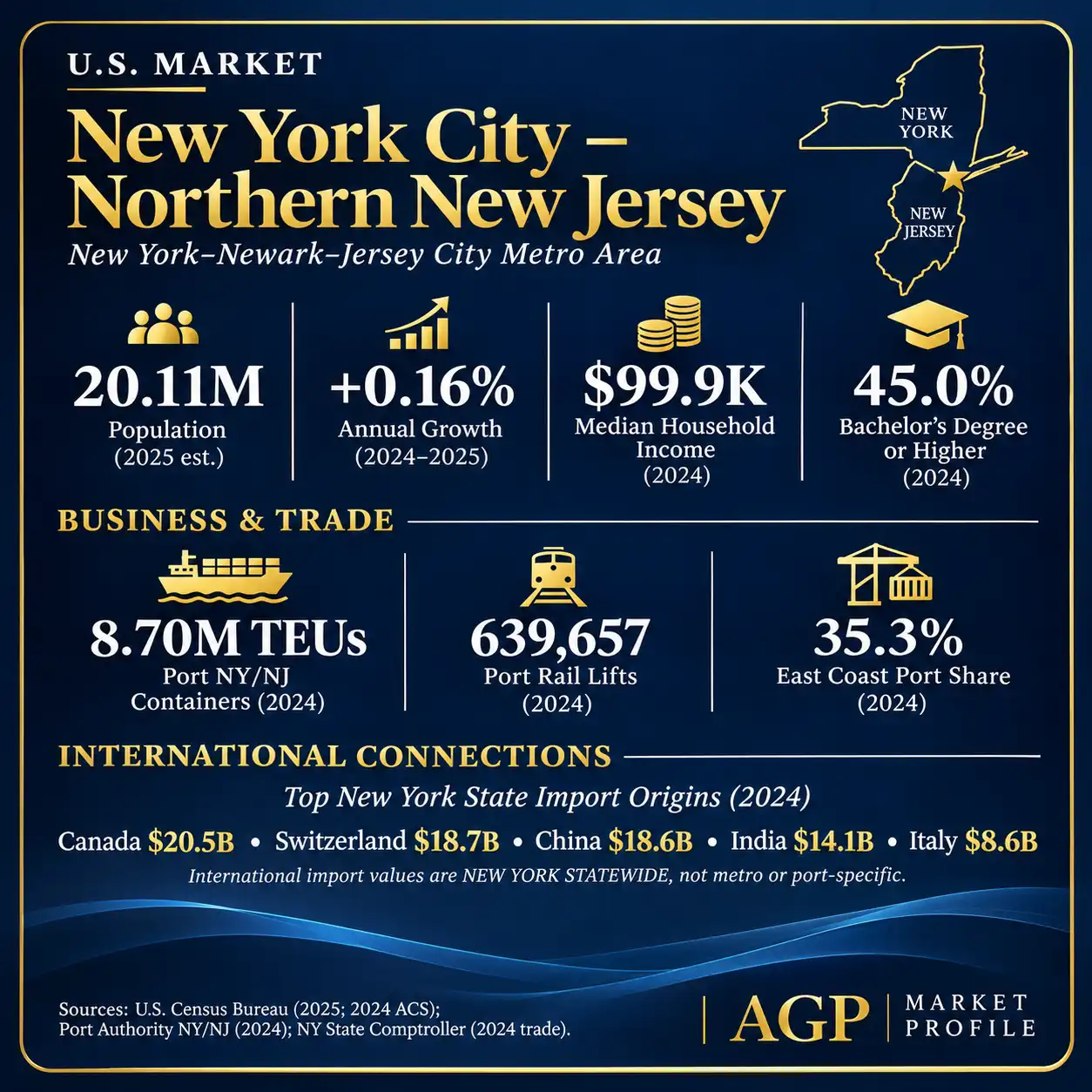
The New York metropolitan region provides access to international finance, professional services, major consumer markets, and one of America’s largest seaports. It includes extensive Chinese, Colombian, and broader Latin American business communities.
International professional networks, major consumer markets, finance, port access, and commercial relationships.
New York and New Jersey have different tax structures, employment rules, licensing requirements, and development procedures. Companies should evaluate both states and individual municipalities when comparing operating costs.
Higher real estate and labor costs, regulatory complexity, and traffic congestion.
Best For: International headquarters, professional services, wholesale trade, consumer brands, and East Coast distribution.
An attractive lease rate or favorable tax structure does not necessarily make a location suitable for your business.
The right choice requires understanding how costs, regulations, infrastructure, workforce availability, international connections, and future growth interact.
AGP helps clients evaluate these factors from the perspective of experienced business owners and operators, rather than relying on general market rankings or expensive studies that may offer little practical value.

Property acquisitions, commercial rent, construction expenses, property taxes, insurance, utilities, and long-term occupancy costs.

Employee availability, recruitment, wages, labor regulations, training, and access to experienced local personnel.

Ports, airports, highways, freight costs, warehousing, electrical capacity, water, telecommunications, and distribution networks.

State and local taxation, economic-development incentives, licensing, permitting, environmental requirements, and the practical complexity of doing business.

Vietnamese, Chinese, Colombian, Panamanian, and other Latin American communities can provide cultural familiarity, language resources, introductions, and business networks.

Access to advisers, contractors, suppliers, business associations, economic-development organizations, and reliable local representatives.

A building may look ideal but lack the electrical capacity your operation requires. An inexpensive lease may carry unexpected insurance, transportation, or construction costs. An attractive tax environment may be offset by labor shortages, regulatory obstacles, or logistical disadvantages.
These are the kinds of problems that can turn an otherwise promising expansion into an expensive undertaking.
AGP brings practical business judgment to the selection process. We look beyond the obvious, ask important questions, coordinate appropriate specialists, and help identify potential problems before major commitments are made.
We don’t believe in spending money on unnecessary studies or complicated plans. We believe in understanding your needs, doing the necessary homework, and helping you make decisions that make business sense.
Whether you’re establishing a manufacturing facility, purchasing commercial real estate, opening a distribution center, or creating your first U.S. business presence, the location you choose can influence your operating costs and growth for years to come.
You know your business. We know how to help you establish it in America.